

Manage requirements efficiently to reduce your development costs and speed time to market.
Cost / License
- Paid
- Proprietary
 United States
Platforms
- Windows
- Linux
- Online
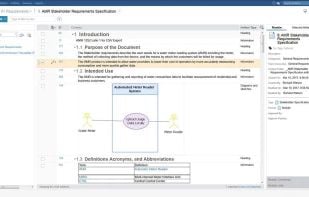


Traceable Requirement Management is described as 'Enables organizations to improve their overall global requirement management process by capturing, delegating, tracking, and verifying requirements so the final design reflects the voice of the customer' and is an app. There are eight alternatives to Traceable Requirement Management for a variety of platforms, including Windows, Linux, Web-based, Self-Hosted and SaaS apps. The best Traceable Requirement Management alternative is IBM DOORS Next. It's not free, so if you're looking for a free alternative, you could try Reqflow or rmtoo. Other great apps like Traceable Requirement Management are Innoslate, Valispace, Requirements Quality Suite and Cradle.
Manage requirements efficiently to reduce your development costs and speed time to market.
Reqflow is a free and open-source tool for traceability of requirements across documents, designed to analyse documents with speed and efficiency.

Innoslate is an integrated systems engineering lifeycle solution with straightforward and convenient requirements management tools. Now you can have end-to-end traceability, baseline and version control, quality analysis, and more in one solution.


Valispace is a co-engineering platform that allows companies that develop complex products to bring them to market faster, helping engineers escape from document hell. It brings all loose engineering data into one central place and helps streamline engineers’ efforts from...

RQS consists of three tools that are plugins of other RM tools, to manage, analyze and improve the quality of the requirements documents/specifications managed by them.

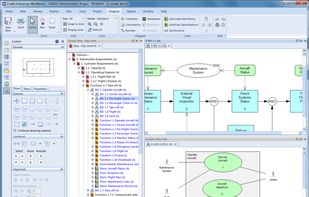
Cradle by 3SL is a requirements management and software / systems engineering tool for agile and phase-based projects including MBSE, agile development, document & project management. Cradle supports small or large teams, either co-located or distributed.
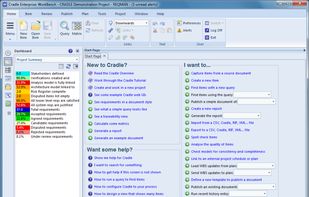
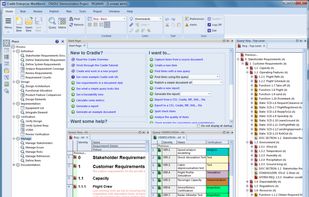
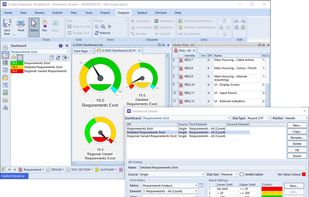

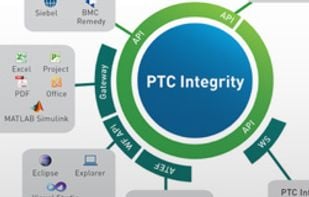
Enables users to create and manage data across the whole sdlc. Acts as a central repository for the software itself, and the requirements / tests and traces. Provides authoring and tracing environment for requirements and all downstream artifacts.


 Germany
 EU
EU
 United Kingdom