Alerta icon
Alerta icon

Alerta

The alerta monitoring system is a tool used to consolidate and de-duplicate alerts from multiple sources for quick ‘at-a-glance’ visualisation. With just one system you can monitor alerts from many other monitoring tools on a single screen.
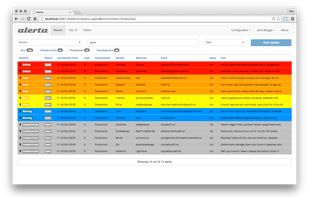
Web interface

Cost / License

  • Free
  • Open Source

Application type

Platforms

  • Mac
  • Windows
  • Linux
6likes
0articles

Features

  1.  Website Monitoring
  2.  Extensible by Plugins/Extensions
  3.  Real-time dashboard
  4.  Dashboard
  5.  Acknowledging alerts
  6.  Server Monitoring

Alerta News & Activities

Highlights All activities

Recent activities

  • Nowlert icon
    Theriark added Alerta as alternative to Nowlert
  • Vexor icon
    sayonara-vexor added Alerta as alternative to Vexor
  • daghemo liked Alerta

Alerta information

AlternativeTo Category

Network & Admin

Popular alternatives

View all

Our users have written 2 comments and reviews about Alerta, and it has gotten 6 likes

Alerta was added to AlternativeTo by Nick Satterly on and this page was last updated .

Comments and Reviews

   
mgiammarco
0

Many things, expecially alarm deduplication

Review from a new or low-activity account — shown here, but not counted in the app rating.
vkulakov
0

Alerta is a good dashboard to manage alerts from different sources. Now my Prometheus-based monitoring system has some components: Prometheus, AlertManager and Grafana. And none of them allows managing alerts (acknowledge, add comments, filtering, sorting and so on). Alerta solves this problem in a convenient way and provides several authentication mechanisms, good API, fast GUI and other usefull features.

Review from a new or low-activity account — shown here, but not counted in the app rating.

Official Links

What is Alerta?

Alerta combines a JSON REST API server for receiving, processing and rendering alerts with a simple, yet effective Alerta Web UI and command-line tool.

There are numerous integrations with popular monitoring tools and it is easy to add your own using the API directly, the Python SDK or the same command-line tool to send alerts.

Access to the API and command-line tool can be restricted using API keys and to the web console using Basic Auth or OAuth2 providers such as Azure, Google, GitHub, GitLab, Keycloak, LDAP or OpenID.