AppBird watches the App Store and Google Play and tells you what changed. It was
built for indie developers, small studios and publishers who need the same data the
big agencies buy, minus the enterprise contract.
The index covers over 7 million apps and games, plus about 2.6 million developer
profiles across both stores. It updates continuously, so a release or a rank move
usually shows up the same day.
Home feed. New and updated apps in chronological order. Filter by store, apps or
games, category, genre and tags.
Top Apps. Free, paid and grossing charts by store, country and category. Daily
snapshots mean you see the direction a rank is moving, not just today's number.
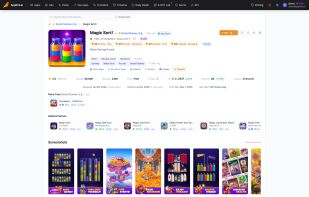
App pages. Rank history, download estimates, rating history, every version with its
changelog, screenshots and preview videos, permissions, recent reviews, and the rest
of that developer's portfolio.
Timeline. Version by version diffs for one app. Shows what actually moved between
builds: changelog, OS requirement, price, permissions.
Daily Radar. A short daily pick of new releases worth a look, with a shareable report.
Ads Intelligence. Creatives detected across the ecosystem, over 300,000 of them,
filterable per app.
Ownership Transfers. A feed of apps changing hands, which is the fastest way to spot
acquisitions and portfolio sales.
Lab. Technical teardowns (X-Ray) of notable games and apps, plus Game DNA, a deeper
walk through the assets, configs, levels and animations pulled out of a build. This
part has no equivalent in the other tools in this category.
Alerts and saved searches. Save a query and get told when something new matches it,
or when an app you follow changes.
Bookmarks and Publisher Hub. Personal watchlists, plus a shared workspace for studios
with a portfolio view, scouting and update diffs for the whole team.
API and MCP. A REST API for scripts and dashboards, and an MCP server so an AI agent
can query search, profiles, charts, timelines and teardown reports directly. Credit
metered, sold as an add-on.
Who uses it: indie iOS and Android developers sizing up a niche before they build,
small game studios watching competitors, publishers keeping an eye on a portfolio,
solo founders checking whether their idea already exists, ASO people, and analysts
covering mobile.
Pricing is self-serve and monthly. No annual lock-in and no sales call. Everything
runs in the browser, there is nothing to install.







 wapplay86 added AppBird as alternative to Mobile Action
 wapplay86 added AppBird as alternative to Appranking


 AppBird Technologies, Inc.