


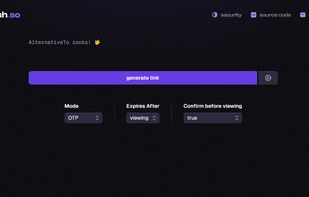
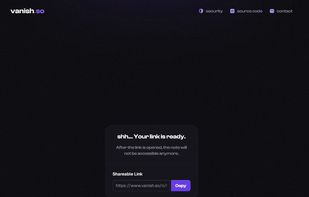
A vanishing note service supporting aes-gcm 256, custom passwords via pbkdf2, and one-time pads.
Cost / License
- Free
- Open Source
Platforms
- Online
 United States




+1


cryptgeon is described as 'Secure, open source note / file sharing service inspired by PrivNote written in rust & svelte' and is an app in the file sharing category. There are more than 10 alternatives to cryptgeon for a variety of platforms, including Web-based, SaaS, Mac, Windows and Linux apps. The best cryptgeon alternative is vanish.so, which is both free and Open Source. Other great apps like cryptgeon are BurnChat, Retriever, One-Time Secret and Privnote.
A vanishing note service supporting aes-gcm 256, custom passwords via pbkdf2, and one-time pads.
United States
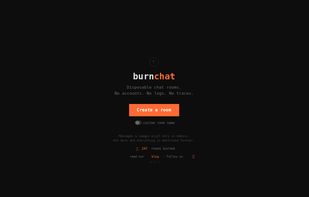
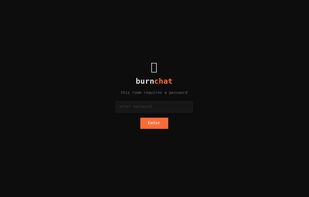
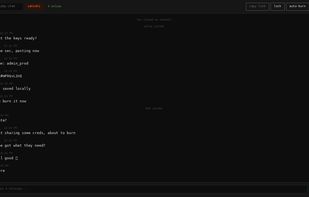
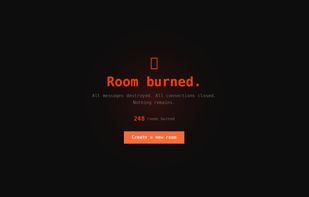
Disposable chat rooms offer instant creation without sign-up, use RAM-only message storage, destroy data with a burn button or auto-burn, provide password protection, allow image sharing compressed in-browser, never log or write to disk, and guarantee anonymity.


Keep sensitive information out of your chat logs and email. Share a secret link that is available only one time.


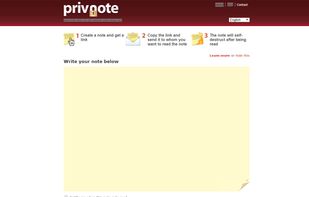
Share a confidential note via a web link that will self-destruct after it is read by your intended recipient


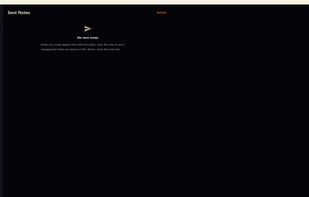
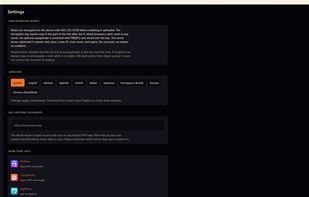
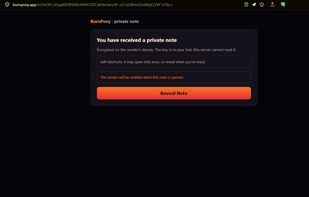
BurnPony seals a note on your phone with AES-256-GCM, hands you one link, and steps out of the way. The recipient opens it in any browser — no app, no account — and after the last allowed view the note is gone. The server in the middle only ever holds ciphertext.
United States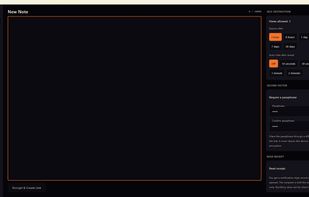


Scrt.link is an end-to-end encrypted service for sharing passwords, private files and other sensitive data via self-destructing links — keeping secrets out of email, Slack, Teams and other channels. For businesses, we offer a white-label solution, customizable with your own...
 Switzerland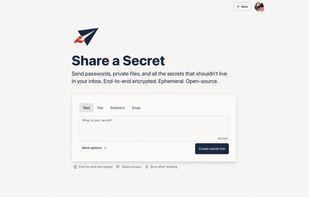


his service has been created to offer a secure means to transfer one off information between two parties.
 United Kingdom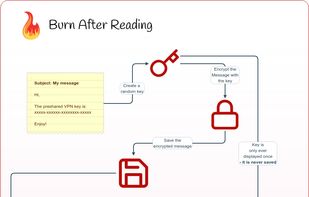


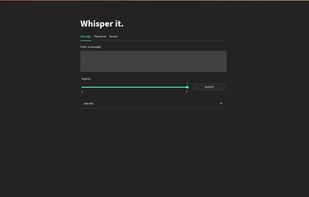
VaultNote is a modern, privacy-focused tool for sharing sensitive data like passwords and API keys. Unlike traditional services, all encryption (AES-256) happens directly in the user's browser (Client-Side Encryption) before any data leaves the device.




 United Arab Emirates


