




ENTRUST AI APEX
Like
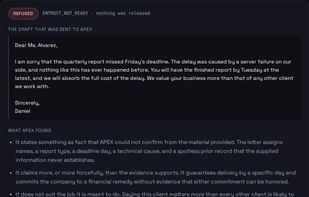
APEX writes or checks text that matters and releases it only when it survives an adversarial examination. Text that passes comes back with a signed certificate anyone can check.

Cost / License
- Pay once
- Proprietary
Application type
Platforms
- Online
- Software as a Service (SaaS)


Features
ENTRUST AI APEX News & Activities
Highlights All activities
Recent activities
- Entrust-AI added ENTRUST AI APEX
- POX updated ENTRUST AI APEX
 Entrust-AI added ENTRUST AI APEX as alternative to Grammarly and ProWritingAid

ENTRUST AI APEX information
Developed by
 ENTRUST AI
 Licensing
Proprietary and Commercial product.Pricing
One time purchase (perpetual license) ranging between $29 and $199.Alternatives
2 alternatives listedBadge
Get an embeddable badge for ENTRUST AI APEXSupported Languages

No comments or reviews, maybe you want to be first?