Signal9 is a modern IT Operations platform that unifies alert management, on-call, and IT service management (ITSM) for IT Operations, NOC, SRE, DevOps, and Platform Engineering teams. It is purpose-built for AI, not retrofitted.
What it replaces
Signal9 is an alternative to Opsgenie for on-call and paging, and to running separate alerting, on-call, incident, and ITSM tools side by side. One platform covers alert intake and triage, on-call and escalation, incident, problem, change, and request management, a knowledge base, automation, analytics, and collaboration in Microsoft Teams and Slack. It works with the monitoring and ticketing systems already in place, so there is no rip-and-replace project.
How it works
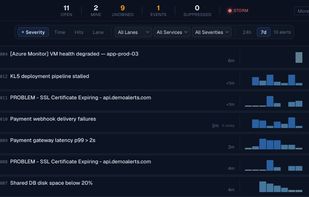
Alerts arrive by email forwarding or webhook. Signal9 parses, normalizes, deduplicates, and correlates them into events, with each alert's own history attached. Incidents, problems, changes, requests, and on-call response share the same operational identity, memory, and understanding, so every response starts with context instead of a blank page.
Signal9 On-Call handles schedules, urgency levels, escalation, and paging by push, email, Slack, SMS, and voice call, and shows who will be reached before a page goes out. Change management includes approvals, scheduling, and a preflight check on planned changes. Automation runs in Assist mode, executing approved actions as a co-pilot, or Autonomous mode, covering the gaps.
The ICDB instead of a CMDB
Instead of a CMDB nobody keeps current, Signal9 builds operational identity from real activity. This is the ICDB, assembled from live alerts, records, and human corrections, so it stays current by construction and there is nothing to groom. It handles operational correlation, where being right matters, and leaves compliance and asset management to a CMDB, where completeness matters.
AI that shows its work
AI agents assist on every record, with the evidence and reasoning shown. Cortex is Signal9's pattern recognition, it learns which signals matter, which clear on their own, and which precede incidents. The Rundown tells a team what needs a human, what handled itself, and what came back. Signal9 also runs an MCP server, so AI assistants such as Claude and ChatGPT can read the live board, get per-alert verdicts with evidence, check who is on call, and set up webhooks, scoped by API key.
Integrations
Alert sources include Splunk, Datadog, Grafana, Prometheus, Amazon CloudWatch, Azure Monitor, Google Cloud Monitoring, New Relic, Dynatrace, Elastic, Zabbix, Nagios, SolarWinds, PagerDuty, and Opsgenie, plus any tool that can send email or a webhook. Tickets can be created in ServiceNow, Jira, GitHub Issues, Zendesk, Freshservice, Linear, Azure DevOps, PagerDuty, and incident.io.
Pricing
Cloud-hosted, with no per-seat fees, unlimited users, no setup project, and the option to cancel anytime. A free trial and a live demo that needs no signup are both available.







 seancavorley added Signal9 as alternative to incident.io
 seancavorley added Signal9 as alternative to PagerDuty, Better Stack, Zenduty and Splunk On-Call
 Signal9