Civitai is the only Model-sharing hub for the AI art generation community! Free to use, open source, and continually improving.
Cost / License
- Free
- Open Source (Apache-2.0)
Application type
Platforms
- Online
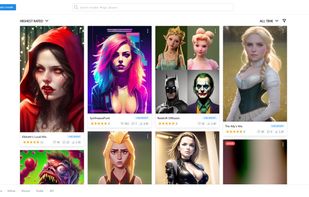

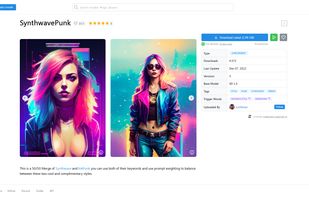
Civitai is the only Model-sharing hub for the AI art generation community! Free to use, open source, and continually improving.


Web search engine with real-time suggestions, related results via semantic technology, image search, Explorer pane, and history sharing through multiple platforms.


A native macOS app store for Homebrew casks. Browse, search, install, update, and uninstall thousands of Mac apps distributed through Homebrew - with original app icons extracted from the source, categories, popularity charts, and one-click actions, all in a clean SwiftUI...


CentOS is a community-supported, free and open source operating system based on Red Hat Enterprise Linux. It exists to provide a free enterprise class computing platform and strives to maintain 100% binary compatibility with its upstream distribution.


Ultimate Windows Tweaker 5 for Windows 11 is now available for download! This popular Windows tweaking software adds tweaks for the new operating system and is widely regarded as the best Windows 11 tweaker.


Dendron is an open-source, local-first, markdown-based, note-taking tool built on top of VSCode. It supports all the usual features you would expect like tagging, backlinks, a graph view, split panes, and so forth.


It lists activities, broadcast receivers, services, providers, permissions, signatures, shared libraries, etc. of any app


LinkAce is meant to provide a long-term archive of links to websites, media files or anything else which has a valid URL. Store interesting articles, neat web tools or libraries you may use sometime in the future.


dd, that stands for ‘data duplicator’, is a command-line utility for Unix mainly used for copying and converting data.
Privacy-first AI agent automates web and app workflows locally, installs in seconds, includes browser automation, self-coding skills, and works fully offline with direct API access.


Twine is a modern, open-source RSS reader designed to put you back in the driver’s seat. Twine combines a beautiful, distraction-free interface with powerful tools to help you stay informed on your own terms.


Beszel is a lightweight server monitoring platform that includes Docker statistics, historical data, and alert functions.


Open source Android app offering ad-free YouTube playback, offline downloads, channel subscriptions without sign-in, advanced blockers, and swipe controls.


Zeal is a free and open-source offline documentation browser for developers. You download docsets for the languages, frameworks, and libraries you use, and Zeal lets you search across all of them at once and jump straight to the symbol, class, or function you need.


Open-source extension hides homepage feed, Shorts, comments, and recommendations on video platforms. Includes instant toggles, no data collection, and advanced controls.


Amberol is a music player with no delusions of grandeur. If you just want to play music available on your local system then Amberol is the music player you are looking for.


Base is a full-featured desktop database front end, designed to meet the needs of a broad array of users, for all kinds of usages, such as keeping track of collections of objects,maintaining customer information databases,maintaining student grade and curriculum...


Zenkit is a flexible, collaborative SaaS platform for project management and database building. Organize, track data and share tasks with team or build custom systems like a CRM or financial planner.


Self-hosted server for audiobooks and podcasts with multi-user support, open-source apps, real-time streaming, automatic library updates, and cross-device sync.


Google Fonts lets you browse all the fonts available via the Google Fonts API. All fonts in the directory are available for use on your website under an open source license and are served by Google servers.


The DistroWatch web site was first published on 31 May 2001. The concept started as a very simple table comprising of 5 major distributions and the chart only compared a few features (price, version, release date) and a few package versions (Linux kernel, KDE, GNOME, XFree86...